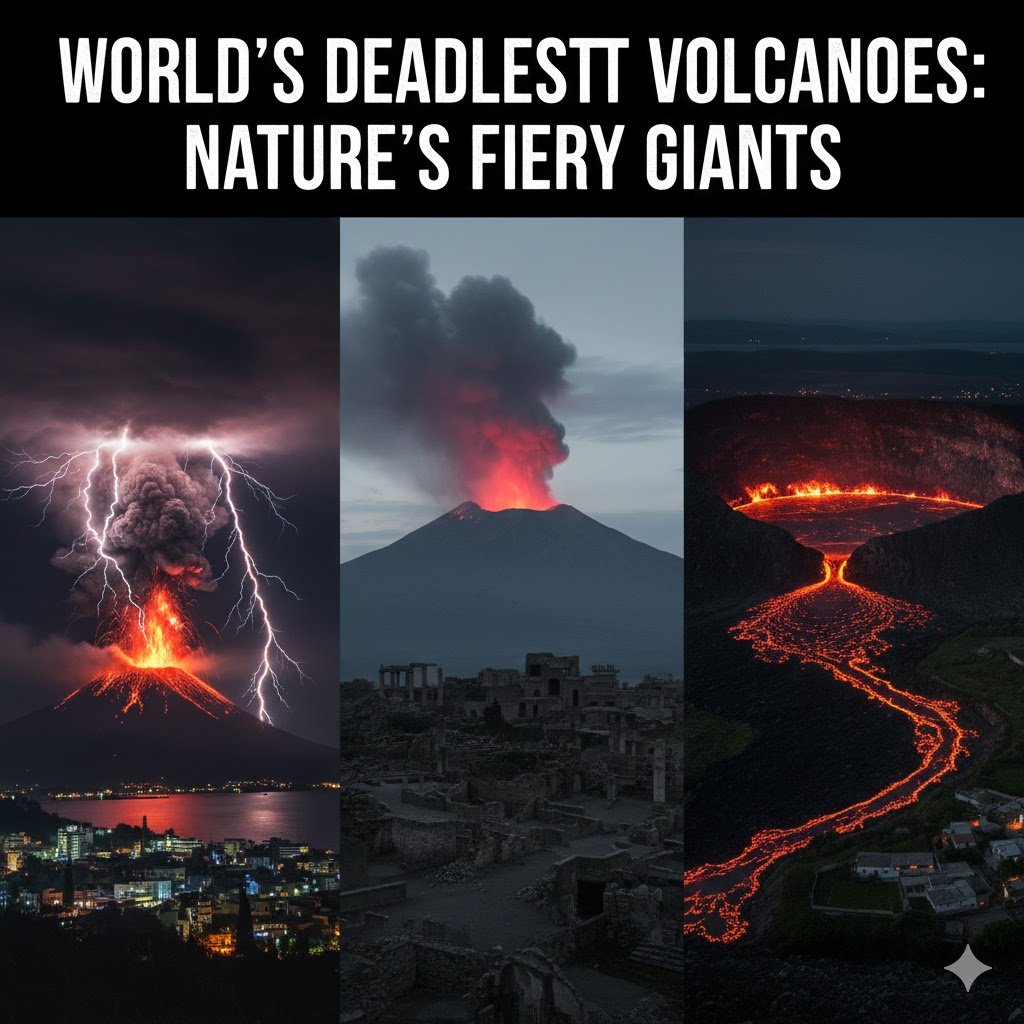
Volcanoes are among the most powerful natural forces on Earth. While they create fertile land and stunning landscapes, they also have the power to destroy cities, change climates, and take thousands of lives. Throughout history, some volcanoes have earned a reputation as the deadliest in the world due to their eruptions, lava flows, and pyroclastic events.
Here are some of the most dangerous and deadly volcanoes on the planet.
1. Mount Vesuvius – Italy
Mount Vesuvius is famous for the catastrophic eruption in AD 79 that buried the Roman cities of Pompeii and Herculaneum. Its proximity to densely populated areas around Naples makes it one of the most dangerous volcanoes today. Scientists continuously monitor Vesuvius for signs of future eruptions.
2. Mount Tambora – Indonesia
The 1815 eruption of Mount Tambora is considered the most powerful in recorded history. It caused tens of thousands of deaths and led to the “Year Without a Summer” due to the massive amount of volcanic ash in the atmosphere, affecting global climate and agriculture.
3. Mount Krakatoa – Indonesia
Krakatoa’s 1883 eruption is infamous for its massive explosions, tsunamis, and the resulting global atmospheric effects. Thousands of people died, and the sound of the eruption was heard thousands of kilometers away. It remains a highly active and closely monitored volcano.
4. Mount Pelee – Caribbean
The eruption of Mount Pelee in 1902 destroyed the city of Saint-Pierre, killing nearly all of its 28,000 residents. The deadly pyroclastic flows made it one of the deadliest volcanic events of the 20th century.
5. Mount Merapi – Indonesia
Known as one of Indonesia’s most active volcanoes, Mount Merapi frequently erupts with lava flows and pyroclastic activity. Surrounding villages are at constant risk, and evacuation plans are essential for saving lives during eruptions.
6. Nevado del Ruiz – Colombia
In 1985, Nevado del Ruiz triggered lahars (volcanic mudflows) that buried the town of Armero, killing over 23,000 people. The combination of ice-capped peaks and volcanic activity makes it particularly dangerous.
Why Volcanoes Are So Dangerous
Volcanoes can cause destruction in multiple ways:
- Lava flows destroying buildings and roads
- Pyroclastic flows that can reach hundreds of kilometers per hour
- Volcanic ash affecting air travel and agriculture
- Tsunamis triggered by underwater eruptions or landslides
- Long-term climate effects from massive eruptions
Monitoring and Preparedness
Modern technology allows scientists to monitor volcanic activity using seismographs, satellites, and gas sensors. Early warning systems and evacuation plans are critical in reducing casualties for populations living near active volcanoes.
Conclusion
Volcanoes are both creators and destroyers. They shape landscapes, enrich soil, and form islands, but they also remind humanity of nature’s unpredictable power. Studying and respecting these deadly giants ensures that communities can live safely near them while appreciating the incredible forces that shape our planet.