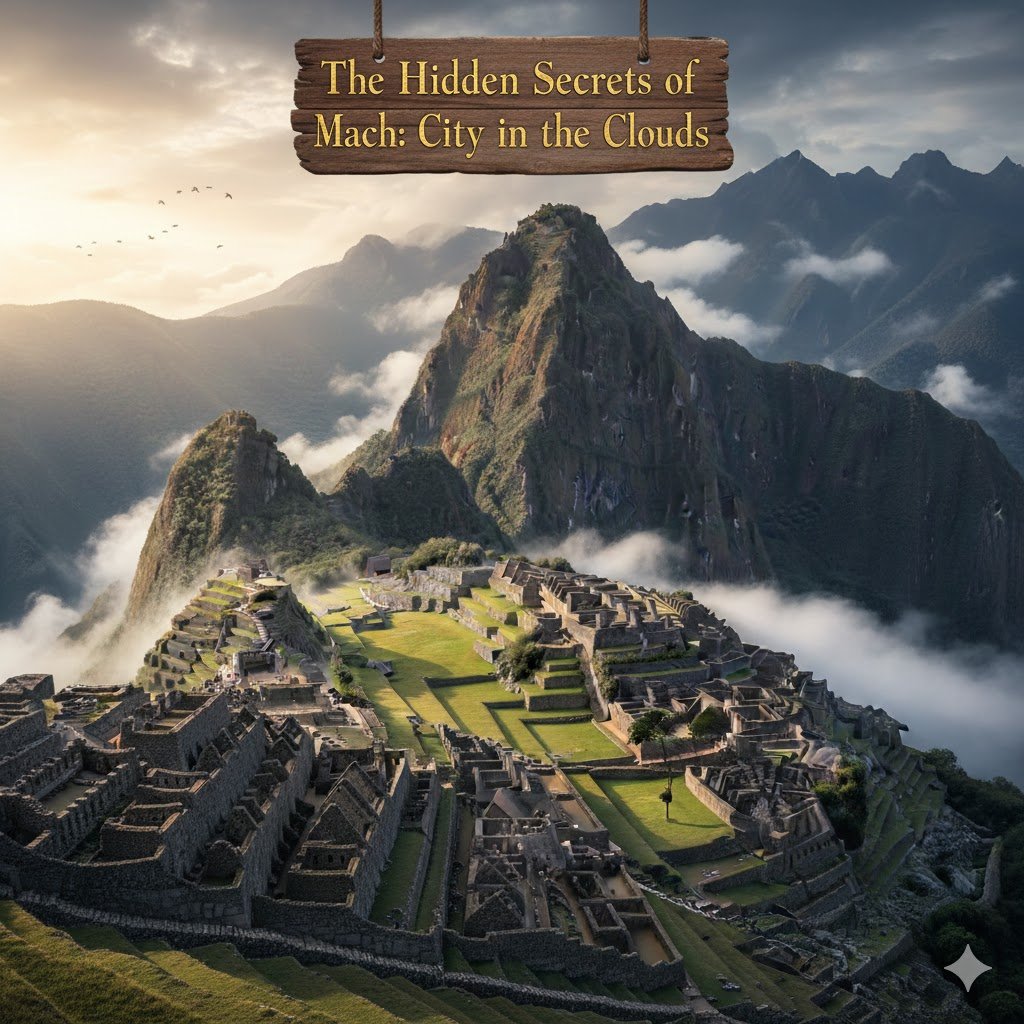
High above the clouds, surrounded by dramatic mountain peaks and deep green valleys, lies one of the most mysterious ancient sites ever discovered. Hidden for centuries from the outside world, Machu Picchu stands today as a symbol of human intelligence, architectural brilliance, and spiritual connection with nature. Located in modern-day Peru, this ancient city continues to amaze travelers, historians, and scientists alike.
Discovery of a Forgotten City
For hundreds of years, Machu Picchu remained unknown to the outside world. Covered by thick vegetation and protected by rugged terrain in the Andes Mountains, the city escaped destruction during foreign invasions that affected many other ancient settlements.
When explorers finally brought global attention to the site in the early 20th century, the world was shocked by its preservation. Stone temples, terraces, stairways, and living areas were still intact, suggesting that the builders possessed advanced knowledge far beyond what many expected from ancient societies.
Architectural Genius Without Modern Tools
One of the greatest mysteries of Machu Picchu is its construction. Massive stone blocks, some weighing several tons, were shaped and fitted together so precisely that no mortar was required. Even today, engineers struggle to explain how such accuracy was achieved without modern machinery.
The stones were designed to interlock naturally, allowing buildings to withstand earthquakes — a common occurrence in the region. Instead of collapsing, the structures move slightly during seismic activity and then settle back into place. This earthquake-resistant design shows remarkable engineering understanding.
A Perfectly Planned Mountain City
Machu Picchu was not built randomly. The entire city follows a carefully organized layout divided into agricultural, residential, and ceremonial zones. Hundreds of terraces were carved into the mountain slopes, creating flat land for farming while also preventing landslides.
The agricultural system demonstrates deep environmental awareness. Drainage channels allowed rainwater to flow safely through the city, preventing flooding and erosion. Researchers estimate that much of the site’s foundation exists underground, designed specifically to control water flow.
Farming Above the Clouds
Growing crops at such high altitude seems nearly impossible, yet the inhabitants developed innovative farming techniques. Terraces were filled with layers of stone, sand, and soil to improve drainage and maintain fertility.
These terraces created different microclimates, allowing various crops to grow successfully. This system ensured food stability for the population and showed a strong understanding of climate adaptation.
Spiritual and Astronomical Significance
Many historians believe Machu Picchu served as a sacred or ceremonial center rather than a large permanent city. Several structures appear aligned with solar events such as solstices and equinoxes.
Windows, temples, and carved stones were positioned to capture sunlight at specific times of the year. This suggests that astronomy played an important role in religious practices and daily life. The people who built the city likely viewed nature, mountains, and the sky as sacred elements connected to their beliefs.
Why Was Machu Picchu Abandoned?
Despite extensive research, the reason behind the city’s abandonment remains unknown. Some theories suggest disease outbreaks, political changes, or resource shortages forced residents to leave. Others believe the site functioned as a royal retreat used only during certain periods.
Because written records are limited, historians rely mostly on archaeological evidence, which leaves many questions unanswered. This mystery is one of the reasons Machu Picchu continues to capture global imagination.
The Journey to Reach the City
Reaching Machu Picchu is considered part of the adventure. Many travelers hike ancient mountain trails, passing through forests, steep paths, and breathtaking viewpoints before arriving at the citadel.
As morning mist slowly lifts from the mountains, the stone structures appear dramatically, creating an unforgettable first impression. Visitors often describe the experience as emotional, almost spiritual, due to the isolation and natural beauty surrounding the site.
Tourism and Preservation Challenges
With millions of visitors arriving each year, preservation has become a major concern. Foot traffic, environmental changes, and climate effects threaten the fragile structures. Authorities have introduced visitor limits and strict pathways to protect the site.
Responsible tourism now plays a crucial role. Travelers are encouraged to respect guidelines, avoid damaging structures, and help preserve the environment for future generations.
Ongoing Discoveries
Even today, Machu Picchu continues to reveal new secrets. Archaeologists regularly discover hidden pathways, underground areas, and previously unknown structures using modern technology such as ground-penetrating radar and digital mapping.
Each discovery adds new pieces to the puzzle but also raises more questions about how the city functioned and why it was built in such a remote location.
Why Machu Picchu Still Fascinates the World
Machu Picchu is more than just a historical site — it represents harmony between humans and nature. Built high in the mountains without destroying the surrounding landscape, it shows how ancient civilizations worked with their environment rather than against it.
The mystery, beauty, and advanced engineering make it one of the most remarkable travel destinations on Earth. Standing among its stone walls, visitors often feel connected to a distant past that still speaks through silent architecture.
Conclusion
The hidden city in the clouds remains one of humanity’s greatest achievements. Machu Picchu combines history, mystery, spirituality, and natural beauty in a way few places can match. Even after decades of research, its secrets are not fully understood, ensuring that curiosity about this ancient wonder will continue for generations.