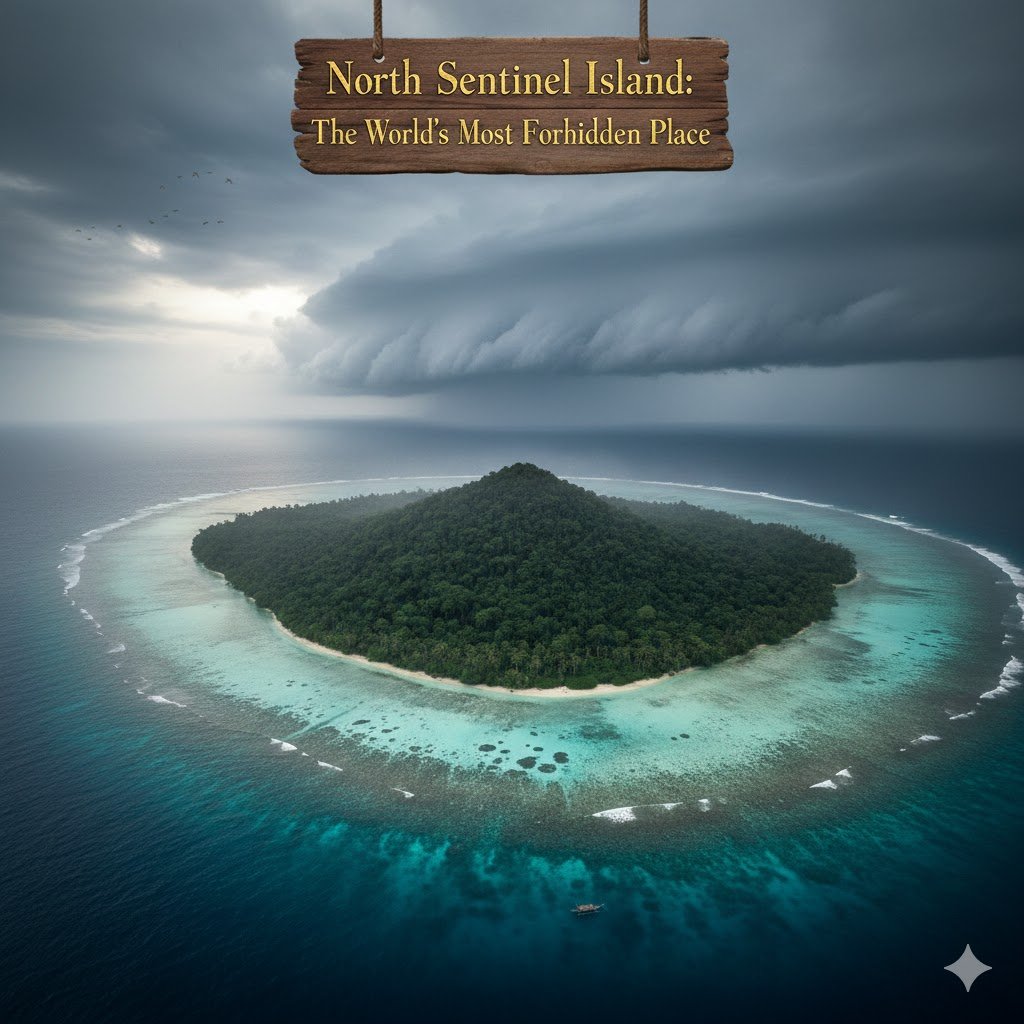
Deep inside the Bay of Bengal lies one of the most mysterious and restricted places on Earth — North Sentinel Island. Unlike popular tourist destinations, this island is completely closed to outsiders. No tourists are allowed, no photographers can freely visit, and even scientists maintain distance. The reason behind this strict isolation is both fascinating and serious: the island is home to one of the last uncontacted tribes in the world.
A Tribe Untouched by Modern Civilization
The island is inhabited by the Sentinelese people, an indigenous tribe believed to have lived there for thousands of years. They have had almost no peaceful contact with the modern world and continue to live using ancient survival methods such as hunting, fishing, and gathering.
Anthropologists believe the Sentinelese may be direct descendants of some of the earliest human populations to migrate out of Africa. Because they have remained isolated for so long, their language, culture, and traditions remain largely unknown.
Why Outsiders Are Not Allowed
The government of India has strictly banned travel to North Sentinel Island. This rule exists mainly to protect the tribe rather than outsiders.
Uncontacted tribes have no immunity to modern diseases like flu or measles. Even a small infection brought by a visitor could wipe out the entire population. Therefore, maintaining isolation is considered essential for their survival.
Additionally, the Sentinelese have repeatedly shown hostility toward outsiders approaching their territory. They defend their island using bows and arrows, making contact extremely dangerous.
Failed Contact Attempts
Over the past century, several attempts were made to establish peaceful communication. Some expeditions tried leaving gifts such as coconuts or tools on the shore. While a few encounters appeared calm, many ended with the tribe warning visitors away.
One major incident occurred when outsiders illegally attempted to land on the island and were killed by tribe members. After such events, authorities strengthened protection laws and increased monitoring around the island.
A Protected Area
North Sentinel Island is part of the Andaman and Nicobar Islands, a remote group of islands known for their natural beauty and biodiversity. However, unlike nearby islands open to tourism, this specific area remains strictly off-limits.
Ships and boats must stay several kilometers away, and even aerial photography is limited. Patrols ensure that no unauthorized person approaches the coastline.
Life on the Island
Very little is known about daily life on North Sentinel Island. Observations from a distance suggest that the tribe builds small huts, uses simple tools, and survives entirely from natural resources.
They fish in shallow waters, hunt animals, and gather fruits from dense forests. Despite lacking modern technology, they have successfully adapted to their environment for thousands of years.
This self-sufficient lifestyle challenges modern assumptions about progress and civilization.
Ethical Questions About Contact
Many experts debate whether isolated tribes should ever be contacted. Some argue that learning about their culture could help humanity understand ancient history. Others strongly believe isolation must be respected to protect their health, independence, and way of life.
Today, most anthropologists agree that leaving the Sentinelese alone is the safest and most ethical decision.
Why the Island Fascinates the World
In an age where satellites map nearly every corner of the planet, North Sentinel Island remains one of the few places still truly unknown. The mystery surrounding the tribe, their language, and their traditions captures global curiosity.
It represents a rare reminder that parts of humanity still exist beyond modern globalization.
Conclusion
North Sentinel Island stands as a powerful example of cultural preservation and human independence. While the modern world continues to advance rapidly, the Sentinelese people live much as their ancestors did thousands of years ago.
Rather than seeing the island as forbidden, many experts believe it should be viewed as protected — a place where history continues quietly, untouched by outside influence.